
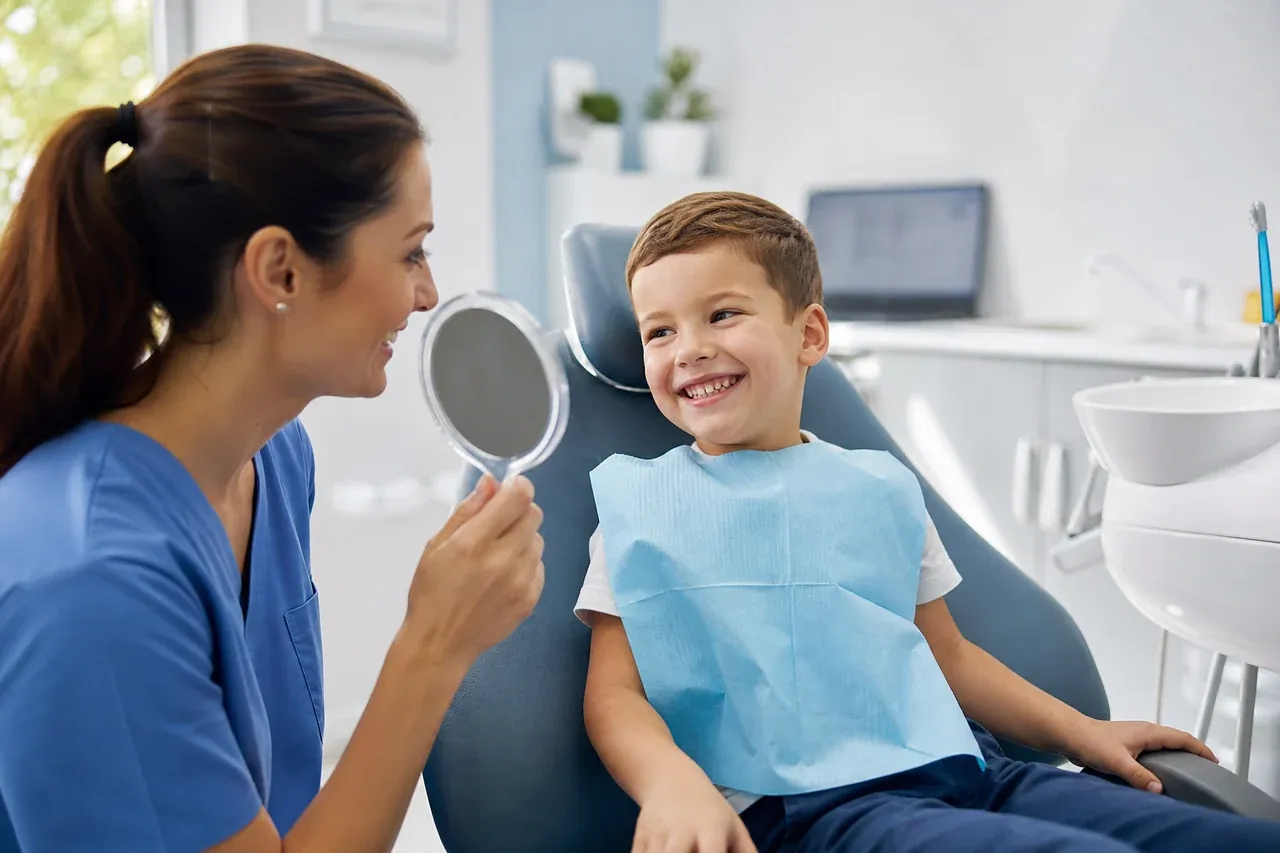
Preparing for your child’s first dental appointment? This guide walks you through what happens at the visit, how to help your child feel comfortable beforehand, and why starting early makes such a difference for lifelong oral health.
At Southeastern Dental Care, we believe a child’s earliest experiences at the dentist shape how they feel about dental care for the rest of their life. Our office is in a house, and that homelike atmosphere helps young patients relax. In this article, Dr. Bui explains exactly what to expect so you can walk in knowing what the visit will involve.
1. When Should the First Visit Happen?
We recommend scheduling your child’s first dental visit by their first birthday, or within six months of their first tooth appearing — whichever comes first. It may seem early, but these initial appointments are short, gentle, and focused on prevention. Establishing a dental home this early lets us monitor development, catch concerns before they become painful, and get your child comfortable with our team long before any treatment is ever needed.
2. How to Prepare Your Child Beforehand
A little preparation goes a long way. Talk about the visit in simple, positive terms in the day or two beforehand, and avoid words like “hurt” or “shot” even reassuringly, since children often latch onto them. Reading a picture book about visiting the dentist or letting your child practice opening wide in a mirror can help. Try to schedule the appointment for a time of day when your child is usually well rested and fed rather than tired or hungry.
3. What Happens During the Appointment
The first visit is largely about familiarity and assessment. We’ll count your child’s teeth, check that the jaw and bite are developing as expected, look for early signs of decay, and gently clean and polish the teeth if your child is comfortable with it. For very young children, we often do a knee-to-knee exam with you holding them, so they stay in your arms the whole time. You’re welcome to stay beside your child throughout — many children do best with a parent right there.
4. Preventive Care We May Recommend
Depending on your child’s age and risk of decay, we may suggest a fluoride treatment to strengthen developing enamel, or dental sealants once the permanent molars come in, to shield the grooved chewing surfaces where cavities most often begin. Both are quick, comfortable, and highly effective at preventing decay in children. We’ll always explain what we’re recommending and why before proceeding.
5. Building Good Habits at Home
Before you leave, we’ll go over brushing and flossing technique suited to your child’s age, discuss which foods and drinks contribute most to decay, and answer questions about thumb-sucking, pacifier use, or teething. Children generally need help brushing until around age seven or eight, when their coordination catches up. Brushing together as a family often works better than supervision alone.
The Bottom Line
Your child’s first dental visit is short, gentle, and mostly about getting acquainted. Coming in early, preparing with positive language, and keeping up a consistent routine at home sets your child up for a lifetime of healthy teeth — and for feeling genuinely at ease at the dentist.
If you have questions about your child’s dental care or would like to schedule their first visit, please don’t hesitate to contact Southeastern Dental Care. Our team loves working with young patients and we’re here to make it a good experience for your whole family!